
Ironing chino pants the right way turns a wrinkled pair into a sharp, professional-looking staple—perfect for the office, interviews, or smart-casual events. Chinos are made from dense cotton twill, which resists wrinkles but can scorch, fade, or develop unwanted creases if ironed incorrectly. The key is using the right prep, technique, and care to protect both fabric and finish.
This guide shows you exactly how to iron chino pants like a pro, using only a steam iron, ironing board, and filtered water. You’ll learn how to preserve dark colors, avoid hardware damage, and achieve a clean, crease-free look in under 15 minutes. Every step is based on expert techniques to keep your chinos looking crisp without wear or fading.
Prepare Tools and Pants

Gather Essential Equipment
Before you begin, collect these must-have items:
• A clean ironing board (dirt can transfer to fabric)
• A steam iron set to high heat (cotton setting)
• Clean, dry chino pants (never iron soiled clothes—stains will set)
• A spray bottle filled with filtered or deionized water
Tap water contains minerals that leave white residue on fabric and can clog your iron. Filtered or deionized water prevents buildup and keeps your iron working longer.
Dampen Fabric Evenly
Lightly mist the chinos until the fabric is damp, not wet. This softens the cotton fibers, making them easier to smooth without scorching. Over-wetting causes water spots and uneven drying; under-dampening reduces wrinkle removal.
Pro tip: Test spray on a hidden area first. If water beads up, your chinos may have a stain-resistant coating—use lower heat and avoid prolonged contact.
Protect Fabric and Color
Iron Inside Out Always
Always turn chino pants inside out before ironing. This shields the outer surface from direct heat and steam, especially important for dark-colored chinos that fade easily. Heat breaks down dyes over time—ironing inside out keeps colors vibrant and prevents a dull, shiny finish.
Even light chinos benefit from this step, as it protects against shine marks caused by heavy pressure.
Avoid Ironing Over Rivets
Never press directly over rivets, buttons, or zippers. Metal parts can scratch your iron’s soleplate, leaving black streaks on future projects. They also create uneven pressure, leading to snags or distorted fabric.
Instead, iron carefully around them. Flip the fabric to smooth areas behind hardware from the inside.
Iron Each Leg Correctly
Lay Leg Flat With Seams Aligned
Start with one pant leg. Place it on the board with the inner pocket facing up. Align the inseam and outseam so they lie flat. Use your fingers to smooth out hidden folds, especially under the pocket flap.
Proper alignment prevents accidental creasing and ensures both legs look symmetrical.
Begin at Ankle, Move Upward
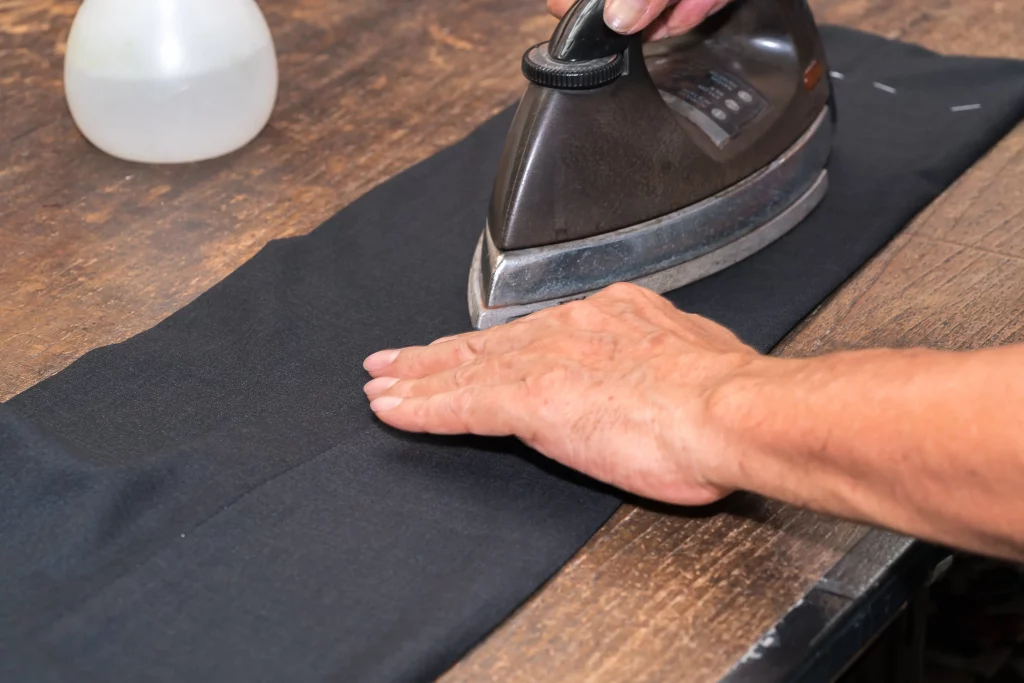
Start ironing at the ankle, using smooth, gliding strokes toward the knee and crotch. Keep the iron moving—never pause in one spot—to avoid scorching or shine.
Avoid pressing all the way to the outer edges of the leg. This prevents sharp, unintended creases that make chinos look like dress pants instead of casual wear.
Flip and Iron Reverse Side
After finishing one side, flip the leg and repeat. Pay extra attention to:
• Crotch seam
• Back pocket area
• Thigh region
These zones collect the most wrinkles from movement and sitting. Ironing both sides ensures deep wrinkle release and even texture.
Repeat for Second Leg
Treat the second leg the same way. Mirror your technique to keep both legs uniform. Check alignment often to maintain balance.
Press Back Panel and Seat
Position Seat Over Board Tip
To iron the back panel, drape the chinos so the seat hangs over the pointed end of the ironing board. This shape supports the curved area naturally, giving full access without stretching the fabric.
Hold the waistband steady with one hand while ironing with the other.
Smooth Pockets Without Ironing Inside
Never insert the iron into the back pocket. Doing so causes ruffling, distortion, and unwanted texture. Instead, iron only the outer edges and the top of the thigh.
While pressing one side, use your free hand to stretch and smooth the opposite pocket flat. This keeps both sides even without direct iron contact.
Final Touches and Drying
Shake and Fold After Ironing
Once fully pressed, hold the chinos by the waistband on both sides and give them a gentle shake. This helps the fabric settle into a natural hang and releases residual tension.
Then, fold edge to edge and lay flat for final inspection.
Air Dry Before Hanging
Hang chinos on a wooden hanger—they support the waistband better than plastic—and place them outside your wardrobe to air dry for about one hour.
This cooling period removes lingering moisture and heat, preventing new creases from forming due to weight or friction.
Never Hang Warm or Damp
Hanging chinos immediately after ironing traps heat and dampness, causing:
• New wrinkles as fabric cools unevenly
• Misshaping around the hips and seat
• Loss of crisp finish
Wait until completely cool and dry before storing.
Best Practices Summary
Follow Core Ironing Rules
Stick to these six essential rules for flawless results:
1. Iron inside out – Protects color and prevents shine
2. Use damp, not wet, fabric – Optimizes wrinkle removal
3. Use filtered or deionized water – Avoids mineral stains
4. Skip rivets and hardware – Prevents iron damage
5. Don’t iron inside pockets – Stops ruffling and texture issues
6. Cool before hanging – Maintains shape and finish
These habits protect your pants and equipment while delivering professional results.
Frequently Asked Questions About Ironing Chino Pants
Can I iron chino pants without a spray bottle?
Yes, but lightly dampening the fabric is crucial. If you don’t have a spray bottle, use a damp cloth to gently wipe the surface before ironing. Avoid soaking—just enough moisture to soften the fibers.
Should I iron chinos inside out?
Yes, always. Ironing chinos inside out protects the outer fabric from heat damage, fading, and shine—especially important for dark colors. It also helps preserve any stain-resistant coatings.
How do I avoid creases on the outer leg?
Avoid pressing all the way to the edge of the leg. Stop about 1 inch from the outer seam. This prevents sharp, dress-pant-style creases and keeps the casual look of chinos intact.
Why should I use filtered water in my spray bottle?
Filtered or deionized water prevents mineral deposits from tap water, which can leave white spots on fabric and clog your iron’s steam vents. It also extends your iron’s lifespan.
Can I hang chinos right after ironing?
No. Always let them air dry and cool for at least one hour on a wooden hanger before storing. Hanging warm or damp chinos causes new wrinkles and misshaping, especially in the seat and hips.
How often should I iron chino pants?
Iron chinos after every wash if you want a crisp look. For everyday wear, light steaming or spot-pressing may suffice. Regular ironing maintains shape and appearance, especially for frequently worn pairs.
Key Takeaways for Flawless Chino Pants Ironing
Ironing chino pants doesn’t have to be time-consuming or risky. With the right prep—damp fabric, filtered water, and inside-out positioning—you can achieve a sharp, professional finish safely. Focus on smooth strokes, avoid hardware, and never rush the cooling process.
For best results, repeat this method after every wash and store your chinos on wooden hangers. In just minutes, you’ll keep your chinos looking fresh, wrinkle-free, and ready for any occasion.


