
You’ve spent good money on a well-tailored pair of suit pants—don’t let poor storage ruin them. How to hang suit pants the right way preserves the front crease, prevents wrinkles, and keeps your trousers looking sharp with zero ironing. Most men toss their dress pants on flimsy hangers or fold them incorrectly, leading to stretched waistbands and misshapen legs. The solution? A simple, 10-second technique using the belt loops to lock in the crease. In this guide, you’ll learn the exact folding method, best hangers to use, and storage habits that keep your pants crisp and ready to wear.
Skip the dry cleaner. Avoid last-minute steaming. Master these proven methods and your suit pants will always look professionally pressed.
Choose the Best Hanger for Suit Pants
Use Non-Slip, Wide-Shoulder Hangers
Start with the right foundation: a non-slip, wide-shoulder hanger. These hangers evenly distribute weight across the waistband, preventing slippage and distortion. Look for padded or wooden bars—they protect delicate fabrics like wool, silk, and linen. The padding prevents indentations and keeps the waistband smooth. Avoid anything thin or slippery; your hanger should grip the fabric gently but securely.
Avoid Wire and Thin Plastic Hangers
Wire hangers are the enemy of suit pants. They’re too narrow, lack support, and often bend under weight, causing the waistband to stretch and the legs to twist. Thin plastic hangers can snap or warp over time. Both create unwanted creases and fabric stress. Replace them with padded, wide-shoulder hangers designed for dress trousers. Your pants will last longer and look sharper.
Match Hanger Width to Your Waistband
A hanger that’s too wide distorts the waistband; one that’s too narrow causes sagging. The ideal hanger matches your pants’ waist size so the fabric lies flat. If the waistband bunches or droops, the hanger is the wrong fit. When in doubt, choose adjustable or contoured hangers that gently grip the waistband without pressure points.
Fold Suit Pants to Lock in the Crease
Pinch the Front Belt Loops to Start
The secret to a perfect crease? Pinch the first two front belt loops. Lay the pants flat, front side up, and use your index and middle fingers to grip the loops at the center of the waistband. This creates a natural fold point exactly where the crease should run—straight down the front of each leg. This technique is used by tailors and stylists to maintain a pressed look without ironing.
Pull the Back Up to Form the Crease
With the loops pinched, pull the back half of the pants upward while keeping the front anchored. As you lift, the legs naturally fold along the correct crease line. Let the fabric settle—don’t tug or smooth. The result is a sharp, symmetrical crease that mirrors a professional press. This method works on most dress trousers, especially those with a defined front crease.
Check That the Crease Is Aligned
Inspect both legs to ensure the crease runs straight from waist to hem. It should be centered and uninterrupted. If one side looks off, re-pinch the loops and repeat. This folding technique is fast, effective, and preserves the tailored look. Once folded, your pants are ready to hang—crease locked in place.
Hang Using the Belt-Loop Fold Method

Drape the Folded Waistband Over the Hanger
After folding, drape the pinched loop area over the hanger bar. The waistband should rest evenly, with the crease facing forward. The legs will hang straight and aligned, maintaining the fold. This method keeps the crease intact without clips, bars, or extra tools. It’s ideal for daily wear and frequent use.
Keep Legs Straight and Untwisted
Ensure both legs hang freely and aren’t twisted or bunched. Smooth out minor wrinkles by hand before hanging. Twisted legs lead to uneven creases and poor drape when worn. A quick visual check ensures your pants look sharp the next time you grab them.
Best for Daily Wear and Office Rotation
This folded-over method is perfect for daily use, office wear, or rotating between multiple pairs. It’s fast, requires no special equipment, and eliminates the need for ironing between wears. Once mastered, it becomes a seamless part of your routine—saving time and preserving your investment.
Hang by the Waistband (Quick-Access Method)

Slide the Waistband Over the Hanger
For a faster, no-fold approach, hang pants by the waistband. Use a padded or wide-shoulder hanger and slide the waistband over the top. Make sure the hanger width matches the pants to prevent sagging. This method works well for casual storage or when crease preservation isn’t critical.
Let Legs Hang Straight Down
Hold each leg and let them drape straight down. Avoid draping one leg over the other or folding them—this creates unwanted creases. Keep the front crease facing forward if you want to maintain a pressed look. This method is faster but less effective at crease retention than the fold technique.
Ideal for Travel or Limited Space
Hanging by the waistband is best for quick access, like in a hotel closet or shared wardrobe. It’s not ideal for long-term crease maintenance, but with a quality hanger, it prevents major wrinkles and keeps pants organized.
Use a Professional Suit Hanger for Formal Wear

Choose Hangers with a Center Bar
For tuxedos, wedding suits, or long-term storage, use a suit hanger with a center bar. These hangers have a horizontal bar that supports the legs and keeps the crease sharp. The waistband rests on the main bar, and the legs drape over the center bar, staying aligned and wrinkle-free.
Position the Crease Facing Forward
Hang the pants so the front crease faces outward. This ensures the crease remains visible and undisturbed. Avoid twisting the legs or letting them hang at an angle. A well-designed suit hanger keeps everything in place with zero effort.
Perfect for Tuxedos and Seasonal Storage
This method is ideal for formal wear, seasonal storage, or special occasions. The added support prevents sagging and maintains a pristine appearance. Pair it with a breathable garment bag for maximum protection.
Avoid These Common Suit Pants Hanging Mistakes
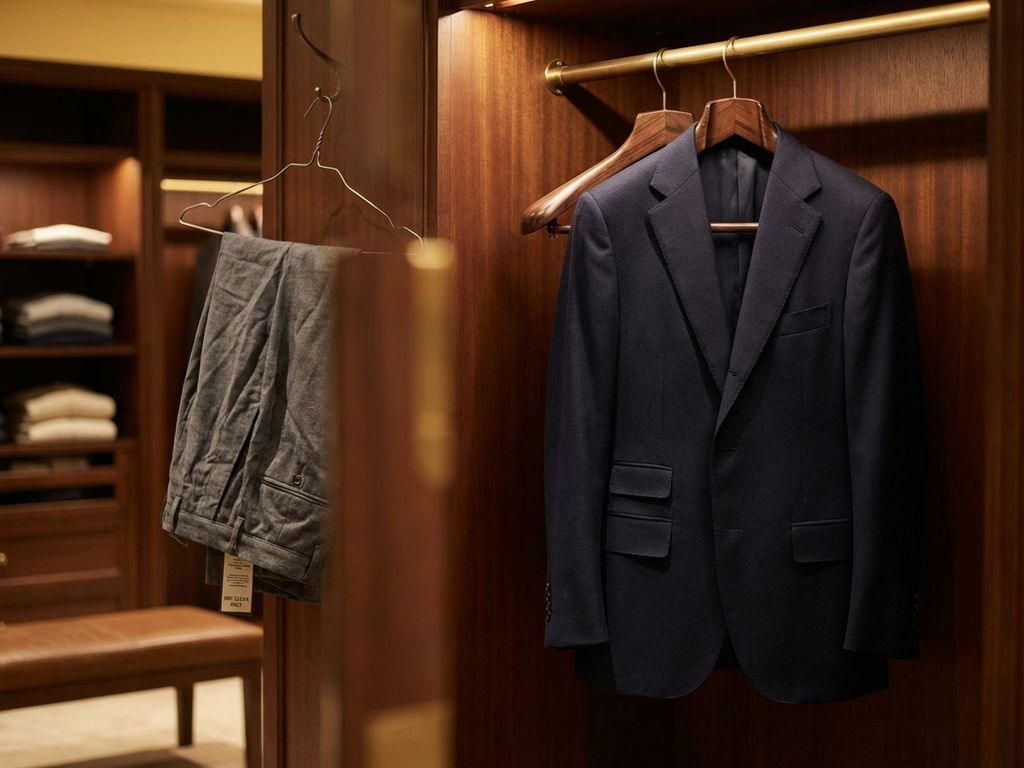
Never Use Wire Hangers
Wire hangers stretch fabric, leave deep indentations, and often break. They’re the #1 cause of ruined suit pants. Replace every wire hanger with a padded or wooden alternative. Your suits will last longer and look better.
Don’t Hang Wet or Damp Pants
Hanging damp or wet pants causes stretching, especially in heavy fabrics like wool. Always let pants dry completely before hanging. If they’re lightly worn or steamed, air them out for a few hours first.
Avoid Overcrowding Your Closet
Squeezing too many garments together crushes pants and creates wrinkles. Leave 1–2 inches between items. This allows airflow and prevents fabric distortion. A well-organized closet protects your investment and makes dressing easier.
Store Suit Pants Properly for Long-Term Wear
Use Breathable Garment Bags for Off-Season Storage
When storing pants for months, slip them into a breathable cotton or canvas garment bag. This shields them from dust, moths, and light. Avoid plastic bags—they trap moisture and can cause mildew.
Keep in a Cool, Dry, Dark Closet
Store pants in a cool, dry space away from sunlight. UV rays fade fabric and weaken fibers. Humidity causes musty odors and mildew. A closet with stable temperature and low humidity is best for preserving color and structure.
Rotate Pants to Prevent Deep Creases
Wearing the same pair repeatedly creates permanent creases. Rotate between 2–3 pairs to distribute wear. This extends the life of each garment and keeps them looking fresh.
Care for Delicate and Heavy Fabrics
Turn Delicate Pants Inside Out
For silk, linen, or fine wool, turn pants inside out before hanging. This protects the outer surface from snags, light, and friction. Use padded hangers and garment bags for extra protection.
Support Heavy Winter Trousers Properly
Thick or heavy trousers need sturdy, wide wooden hangers that won’t bend. Check periodically for waistband stretching. If you notice distortion, switch to a reinforced hanger.
Prevent Wrinkles in Cotton and Rayon
Fabrics like cotton or rayon wrinkle easily. Use the belt-loop folding method every time. For extra protection, choose hangers with center bars or store folded in drawers if space allows.
Troubleshoot Common Suit Pants Hanging Problems
Pants Keep Sliding Off the Hanger
Switch to non-slip hangers with a rubberized coating. Or use hangers with clips or grips. Ensure the hanger width matches the waistband—too narrow, and it won’t hold; too wide, and it distorts the fabric.
Crease Won’t Stay Sharp
Reapply the belt-loop pinch technique. Make sure pants are completely dry before hanging. If the crease still fades, your hanger may lack support—try one with a center bar.
Wrinkles Appear After Storage
Increase spacing between garments. Check for high humidity—use a dehumidifier if needed. For minor wrinkles, hang pants in the bathroom during a hot shower to gently steam them.
Waistband Is Stretching
Stop hanging wet or heavy pants. Use padded hangers to reduce pressure. Rotate your pants more frequently to prevent overuse of one pair.
Frequently Asked Questions About How to Hang Suit Pants
Should I hang or fold suit pants?
Hang suit pants using the belt-loop fold method or a center-bar hanger to preserve the crease. Folding in drawers can work for casual wear but risks deep creases. Hanging is best for maintaining a sharp, professional look.
How do you hang suit pants without a crease?
If you don’t want a crease, hang pants by the waistband with legs straight and untwisted. Avoid folding or using center bars. This works for casual trousers or uncreased dress pants.
Can you hang suit pants by the cuff?
No—hanging by the cuff distorts the leg shape and stretches the fabric. Always hang by the waistband or use the belt-loop fold method to maintain proper drape.
How do you keep the crease in dress pants when hanging?
Use the belt-loop pinch technique: pinch the front loops, pull the back up, and drape over a wide, padded hanger. This locks in the crease naturally without ironing.
What hanger is best for preventing wrinkles in suit pants?
A padded, wide-shoulder hanger with a center bar is best. It supports the waistband and legs evenly, preventing sagging and creasing. Avoid wire or thin hangers.
How often should you rotate suit pants?
Rotate between 2–3 pairs every 2–3 wears. This prevents permanent creases, reduces fabric fatigue, and extends the life of each pair.
Key Takeaways for Mastering How to Hang Suit Pants
• Use non-slip, wide-shoulder hangers—never wire or thin plastic
• Fold using the belt-loop pinch method to preserve the crease automatically
• Hang folded pants with the crease facing forward and legs straight
• Store in a cool, dry, uncrowded closet with breathable garment bags
• Rotate pants regularly and never hang wet or heavy trousers
Master this routine and your suit pants will always look crisp, tailored, and ready to wear—no ironing required. Start tonight, and see the difference tomorrow morning.


