
You found the perfect pair of pants—great fit, stylish cut—but they drag on the floor. Before you consider cutting them, here’s the good news: you can make pants shorter without cutting. Whether it’s to preserve a designer hem, avoid permanent damage, or test a new length, there are smart, fabric-safe ways to shorten pants while keeping the original edge intact.
This guide reveals proven no-cut methods that let you adjust pant length using sewing, adhesives, pins, and folds. You’ll learn how to pick the right technique based on your fabric, tools, and how long you need the fix to last. From iron-on tape to hidden hand stitches, we cover every option—so you can tailor your pants perfectly, safely, and without a single snip.
Let’s fix that length—no scissors required.
Sew the Original Hem Up
Preserve the Factory Hem While Shortening
Many pants come with a professionally finished hem that’s hard to replicate. Instead of cutting, fold the existing hem upward and secure it in place. This method keeps the original edge intact and allows future lengthening if needed.
Try on the pants with your usual shoes and use pins to mark your ideal length at the ankle. Remove the pants and measure from the original hem to the pin—this tells you how far to fold up.
Turn the pants inside out. Fold the bottom edge up toward the inside, just below your marked line. Press the fold with an iron for a clean edge. Pin or clip it securely all around.
Sew along the top edge of the folded hem using a blind hem stitch (for invisibility) or a straight stitch (for durability). Match the thread color to your fabric. A sewing machine works quickly, but hand-sewing gives better control for a seamless look.
Once stitched, press the new hem flat—avoid pressing directly on seams to prevent shine. Try the pants on to confirm the length. Adjust if needed before finalizing.
Why Keep the Original Hem?
• Maintains the garment’s professional finish
• Preserves design details like cuffs or topstitching
• Allows future lengthening if desired
• Looks tailor-made, not DIY
Best for wool trousers, dress pants, and high-end jeans where the original hem adds value.
Use Fabric Hemming Tape
Create a No-Sew Hem in Under 10 Minutes
No sewing machine? No problem. Fabric hemming tape lets you shorten pants fast using heat-activated adhesive. It’s ideal for a semi-permanent fix without needles or thread.
Turn pants inside out. Wear your usual shoes and mark the desired length with chalk or pins. Fold the pant leg up to that line, tucking the raw edge inside. Press with an iron to set the crease.
Cut a piece of hemming tape to match the inner seam length. Place it between the folded fabric and the pant leg. Fold the fabric over so the tape is sandwiched between layers.
Set your iron to the correct heat setting—medium for cotton, low for synthetics. Press firmly over the fold for 10–15 seconds per section. Let it cool completely—this sets the bond.
Check by gently tugging the hem. If secure, trim excess tape. Wait 24 hours before washing to ensure full adhesion.
Best Fabrics for Hemming Tape
• Cotton
• Polyester blends
• Linen
• Lightweight denim
Avoid using on stretchy knits or delicate silks unless the tape is specifically labeled for them.
Apply Fusible Webbing for a Strong, Lasting Hold
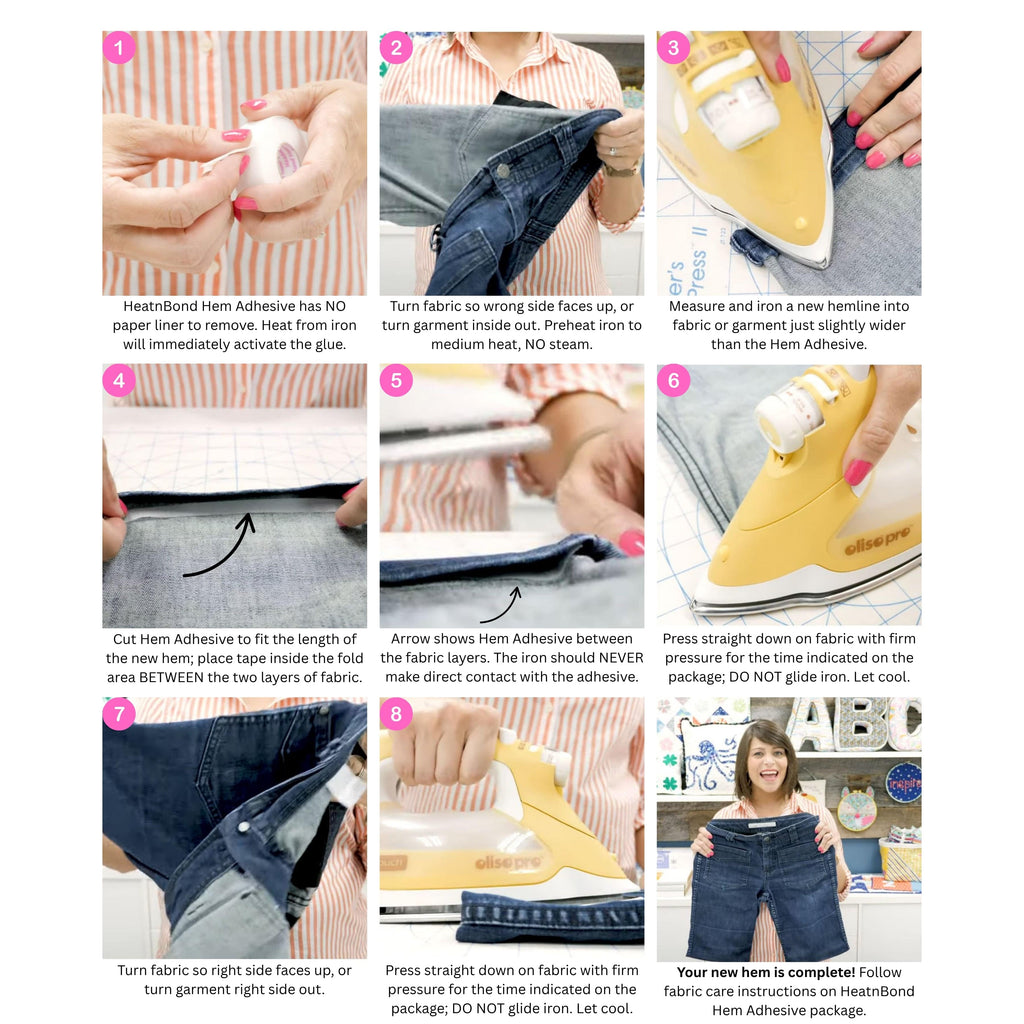
Bond Fabric Layers Without Sewing
Fusible webbing (like HeatnBond or Wonder Under) is a thin, adhesive-backed sheet that bonds fabric when heated. It’s stronger than hemming tape and perfect for heavier fabrics like chinos or wool.
Turn pants inside out. Mark your ideal length while wearing them. Fold the bottom edge up to the mark, hiding the raw edge inside. Press with an iron to create a sharp fold.
Cut fusible webbing to fit the inner circumference of the pant leg. Peel off the backing (if applicable) and place the adhesive side down on the folded edge. The webbing should sit between the folded fabric and the main leg.
Iron over the area with firm pressure. The heat activates the adhesive. Let it cool completely—this is essential for a strong bond.
For extra durability, light topstitching around the hem is optional. It adds strength and a clean finish.
Pro Tips for Success
• Test on a scrap first to avoid melting synthetics
• Use parchment paper between iron and fabric to prevent sticking
• Choose lightweight webbing for thin fabrics, heavy-duty for thick materials
This method withstands multiple washes and mimics a sewn hem—no needle required.
Fold and Pin Temporarily

Instant Fix for Same-Day Wear
Need shorter pants right now? Use safety pins to fold and secure excess length. It’s the fastest no-cut method—perfect for travel, last-minute events, or testing a new length.
Try on the pants. Fold the bottom edge up to your desired length, tucking the excess inside. Adjust until the hem hits just above the shoe.
Use small safety pins to fasten the fold to the inner seam or lining. Place pins at the side and back where they won’t show. Ensure the fabric lies flat and doesn’t bunch.
For a cleaner look, fold the pant leg into a cuff and pin from the outside—just hide the pins in the crease.
When to Use This Method
• Temporary wear (a few hours to a day)
• Casual outfits
• Testing hem length before permanent alteration
• Emergency fixes when no tools are available
Not ideal for formal settings, but a lifesaver when you’re caught off guard.
Double-Fold with Fabric Glue
Permanent No-Sew, No-Iron Hem
Want a no-iron, no-sew solution? Fabric glue creates a strong, washable bond that holds folded hems—without heat or stitching.
Turn pants inside out. Mark your target length while wearing the pants. Fold the bottom edge up once to the mark, then fold again to encase the raw edge. This double fold prevents fraying.
Apply fabric glue (like Aleene’s or Dritz) along the inner edge of the second fold. Press the glued section firmly against the pant leg. Hold for 30 seconds to start bonding.
Let dry flat for at least 4–6 hours, or overnight for best results. Avoid wearing or washing until fully cured.
Why Fabric Glue Works
• Bonds permanently with proper drying
• Flexible when dry—won’t crack during movement
• Washable (check product label)
• Invisible once dry
Best for cotton, denim, and medium-weight fabrics. Use stretch-formula glue for knits.
Choose the Right Method for Your Fabric

Match Technique to Material Type
Not all fabrics respond the same to no-cut shortening. Using the wrong method can cause damage or failure.
Cotton & Denim
• Best for: Hemming tape, fusible webbing, sewing
• Avoid: Excessive heat on dark denim (can cause shine)
• Tip: Pre-wash to prevent shrinkage after hemming
Polyester & Blends
• Best for: Iron-on tape, fabric glue
• Avoid: High heat (can melt fibers)
• Tip: Use low setting and test first
Wool & Tweed
• Best for: Sewing or fusible webbing
• Avoid: Glue (can stiffen fabric)
• Tip: Use steam iron carefully to prevent felting
Knits & Stretch Fabrics
• Best for: Blind stitch sewing
• Avoid: Most adhesives (restrict stretch)
• Tip: Use ballpoint needle if sewing
Always test your method on an inconspicuous area first—like the inside cuff or seam allowance.
Prevent Common Mistakes
Avoid These No-Cut Hemming Pitfalls
Even simple fixes can go wrong without attention.
Uneven Hems
• Cause: Measuring while sitting or without shoes
• Fix: Always measure standing, with intended footwear
• Pro tip: Have someone help mark both legs at eye level
Adhesive Failure
• Cause: Insufficient heat, cooling time, or wrong product
• Fix: Follow instructions exactly; let bonds cool/dry fully
• Pro tip: Reinforce glued hems with a few hand stitches
Visible Stitches or Bulk
• Cause: Wrong stitch type or thick thread
• Fix: Use blind hem or ladder stitch with matching thread
• Pro tip: Press hems flat before sewing to reduce bulk
Fabric Damage
• Cause: Too much heat, wrong needle, or aggressive pinning
• Fix: Use appropriate tools and settings
• Pro tip: Place a pressing cloth between iron and fabric
Maintain the New Hem
Care Tips for Long-Lasting Results
Once shortened, care for your pants to preserve the new hem.
• Wash inside out to protect adhesive or stitches
• Air dry or tumble dry low—high heat can weaken bonds
• Iron carefully—use low heat and avoid direct pressure on seams
• Store flat or hung to prevent stretching
For glued or taped hems, avoid soaking or dry cleaning unless the product specifies it’s safe.
Key Takeaways for Making Pants Shorter Without Cutting
• You don’t need to cut fabric to shorten pants—folding, sewing, gluing, and taping are all effective
• Sewing the original hem up preserves value and allows future adjustments
• Hemming tape and fusible webbing offer fast, durable no-sew solutions
• Fabric glue works for permanent, no-iron hems on cotton and denim
• Safety pins are perfect for quick, temporary fixes
• Always match the method to your fabric type and test first
Choose the method that fits your skill level, tools, and how long you want the change to last. With the right approach, you can achieve a professional-looking hem—without ever cutting the fabric.
Frequently Asked Questions About Making Pants Shorter Without Cutting
Can I shorten pants without cutting and still keep the original hem?
Yes. By folding the existing hem upward and sewing or bonding it in place, you preserve the factory finish and can even lengthen the pants later if needed.
How do I hem pants without sewing?
Use fabric hemming tape, fusible webbing, or fabric glue. These adhesives bond the folded fabric in place when activated by heat or drying, creating a no-sew hem.
Is hemming tape permanent?
Hemming tape is semi-permanent. It lasts through multiple washes but may weaken over time, especially with frequent laundering or high heat. Reinforce with stitching for longer durability.
Can I use fabric glue on jeans?
Yes, fabric glue works well on denim. Use a washable, flexible glue like Aleene’s Fabric Fusion. Apply with a double fold to hide the raw edge and let dry overnight before wearing.
How do I prevent wavy or uneven hems?
Always measure while standing and wearing your intended shoes. Pin or mark both legs at eye level for symmetry. Press folds before securing to ensure a crisp, even line.
What’s the best method for stretchy pants?
For knits or stretchy fabrics, use a blind hem stitch by hand or machine. Avoid adhesives, as they can restrict movement and crack when stretched.


