
You’ve found the perfect pair of pants online, but will they fit? One of the most common fit issues—especially with dress pants—is tightness or pulling across the hips. The key to avoiding this isn’t just knowing your waist size—it’s accurately measuring the hip dimension. Whether you’re sizing a garment or your body, understanding how to measure hip length for pants ensures a comfortable, tailored look. This guide breaks down two essential methods: measuring the hip width on a pair of pants (garment measurement) and measuring your body’s hip circumference (personal sizing). You’ll learn exactly where to measure, what tools to use, and how to avoid common mistakes—so you can shop with confidence or tailor with precision.
Measure Pants Hip Width (Laid Flat)
When buying dress pants online or comparing sizes across brands, measuring the garment itself gives you real-world fit data. This method captures the actual space available in the hip area.
Locate 7 Inches Below Waistband
Start by buttoning the waistband and zipping the fly completely. Lay the pants flat on a hard, smooth surface like a table—this prevents fabric sag and ensures accuracy. Find the top edge of the waistband and measure 7 inches straight down from that point on the side seam. This spot is the standard location for hip width measurement on dress pants. Do not measure at the waistband or the natural hip curve—doing so will give incorrect results.
Measure Across Front to Outer Edge
Place the end of a rigid measuring tape at the outer edge of the pant leg at the 7-inch mark. Run the tape across the front of the pant, passing through the center front fly, and extend it to the outer edge of the opposite leg. Keep the tape parallel to the waistband throughout. This ensures you’re measuring the full visible width at the correct angle. Avoid twisting or angling the tape, as this distorts the reading.
Smooth Fabric, Avoid Stretching
Use your hands to gently spread the fabric in a light, even motion. Eliminate wrinkles or folds, especially around the fly, but do not stretch the fabric. Stretching adds false inches and leads to inaccurate sizing. For non-stretch fabrics, this step is about alignment; for slight-stretch materials, be extra cautious not to pull.
Record to Nearest Tenth of Inch
Read the measurement where the tape meets the outer edge of the opposite leg. Round the result to the nearest tenth of an inch (e.g., 10.3″) for precision. This level of detail matters when comparing similar sizes or ordering custom-fit pants. Record the number immediately to avoid confusion.
Pro Tip: Double-check that the pants are fully zipped and flat before measuring. Even a slightly open fly can skew results by up to half an inch.
Measure Body Hip Circumference
If you’re determining your own size for shopping or tailoring, measuring your body is essential. This method captures your actual hip dimension—the fullest part of your hips and buttocks.
Stand Feet Together, Tape Level
Stand straight with your feet together and relax your posture. Wear fitted underwear or snug clothing—avoid bulky layers that add false inches. Wrap a soft, flexible measuring tape around the fullest part of your hips and buttocks. This is usually several inches below your waist, near the top of your thighs. Keep the tape parallel to the floor all the way around.
Find Fullest Part of Hips
To locate the widest point, turn sideways and observe where your hips project the most. You can also run your hands down your sides until you feel the maximum curve. That’s your measurement line. Don’t guess—this spot varies by body type and pant style.
Keep Tape Snug, Not Tight
The tape should rest snugly against your skin but not compress your tissue. If it digs in, it’s too tight and will give a smaller measurement. If it’s loose, it adds extra length. Breathe normally—don’t suck in your stomach—and keep the tape horizontal as you read the number.
Record in Consistent Units
Take the measurement in inches or centimeters and record it immediately. For best results, measure at the end of the day when your body is slightly expanded from daily activity—this reflects how pants will feel during all-day wear.
Common Mistake: Measuring too high (near the waist) or too low (below the buttocks) leads to incorrect sizing. Always confirm the fullest point first.
Compare Garment vs Body Measurements
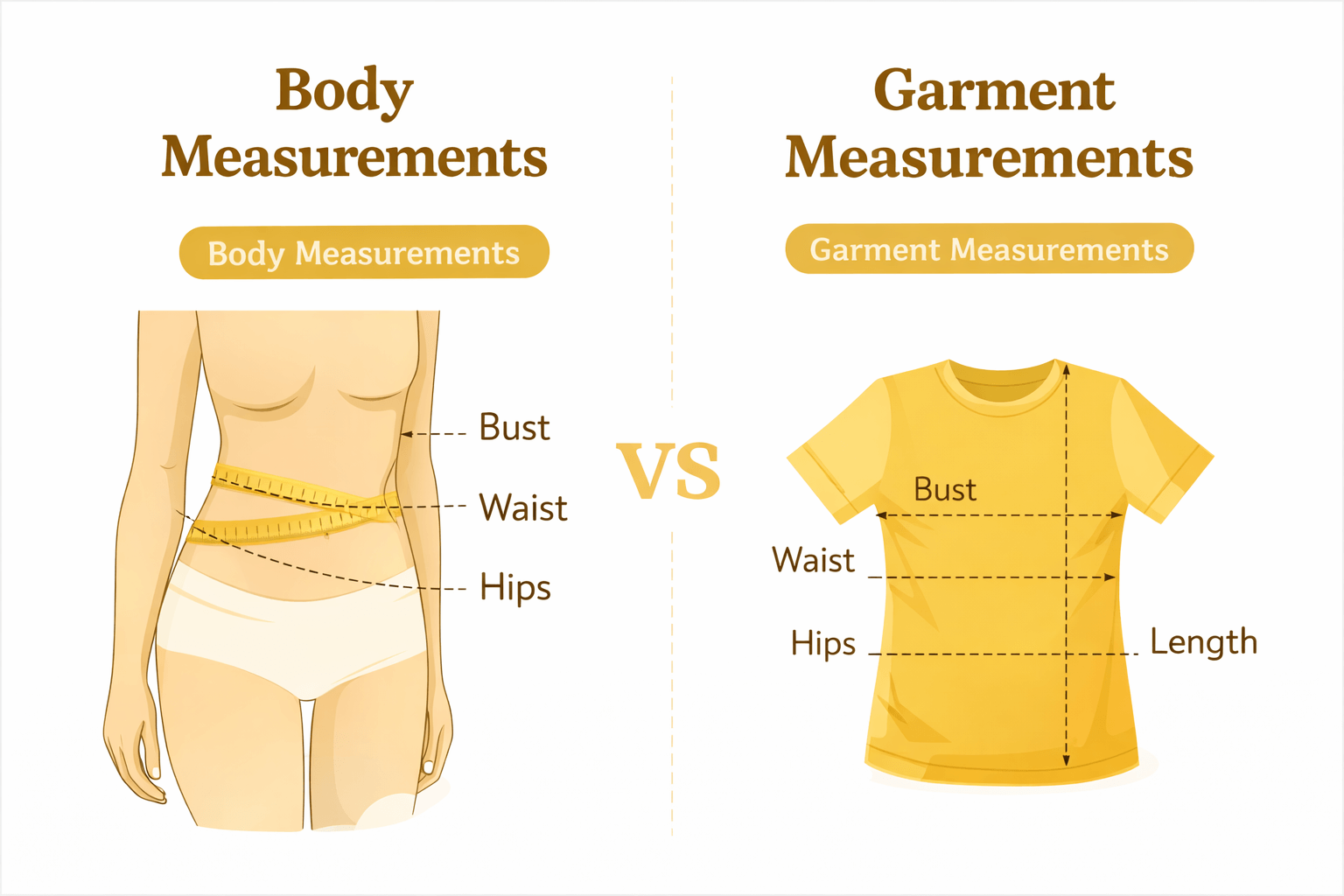
Understanding the difference between garment and body measurements prevents fit surprises.
Garment Width vs Body Circumference
The hip width of a pant (measured laid flat) is half the total circumference. For example, if the laid-flat hip width is 10 inches, the full hip circumference is 20 inches. Compare this number to your body hip measurement to determine fit. If your body measures 38 inches around, the pant must have at least 38 inches of total hip circumference—or more if you prefer a looser fit.
Allow for Ease and Fabric Type
Pants need wearing ease—extra room for movement. A slim-fit dress pant might add 2–4 inches to your body measurement, while a relaxed fit could add 6 or more. Also consider fabric: stretch materials (like elastane blends) can accommodate tighter measurements, while rigid fabrics (like wool or cotton twill) require more room.
Use Both Methods for Online Orders
When shopping online, check if the brand provides laid-flat garment measurements. Compare those to your body size. If they only list waist size, call customer service or check reviews for fit notes. Never rely solely on size labels (e.g., “32” or “L”)—they vary wildly between brands.
Pro Tip: Save your body measurements in a phone note or spreadsheet. Include hip, waist, inseam, and thigh for future reference.
Avoid Common Measurement Errors
Even small mistakes can lead to ill-fitting pants. Stay sharp with these checks.
Wrong Measurement Point on Pants
Measuring at the waistband or hip curve instead of 7 inches below the waistband is the most frequent error. This can make a pant appear 1–2 inches wider than it actually is at the true hip line. Always verify the 7-inch mark with a ruler or tape before starting.
Stretching Fabric or Tape
Pulling the fabric or tape too tight inflates the measurement. For garment measurement, fully extend but don’t stretch the fabric. For body measurement, let the tape rest naturally—no squeezing.
Incorrect Posture or Clothing
On your body, standing with feet apart or wearing thick jeans during measurement adds inches. Always measure bare or in light clothing, with feet together and back straight. Avoid measuring right after a large meal when bloating may affect results.
Key Tools and Best Practices

Use the right tools and timing to ensure reliable results every time.
Use Rigid Tape for Pants, Soft for Body
For garment measurement, a rigid tape measure keeps the line straight across the fabric. For body measurement, a flexible soft tape conforms to curves. Don’t substitute one for the other.
Measure at End of Day
Your body expands slightly throughout the day due to gravity and activity. Measuring in the evening gives a more realistic fit for all-day wear. This is especially important if you plan to wear the pants for work or long events.
Double-Check All Readings
Take each measurement twice. If the numbers differ, take a third. Record the average or most consistent value. This simple step prevents costly mistakes when ordering or tailoring.
Why Accurate Hip Measurement Matters
Ensures Comfort and Mobility
Pants that are too tight in the hips restrict movement and cause discomfort. Accurate hip measurement ensures you can sit, walk, and bend without pulling or binding. This is crucial for dress pants worn during long workdays.
Improves Appearance and Drape
Well-fitted hips create clean lines and proper drape. Pants that are too loose sag or bag; too tight ones pull at the seams and distort the fabric. The right fit enhances your silhouette and looks professionally tailored.
Reduces Returns and Alterations
Online shoppers who measure first reduce return rates by up to 50%. Knowing your exact hip size means fewer guesses, less frustration, and more confidence in every purchase.
Frequently Asked Questions About Measuring Hip Length for Pants
Where exactly do you measure hip length on pants?
Measure 7 inches down from the top of the waistband along the side seam. This is the standard point for measuring hip width on dress pants when laid flat. Always measure across the front from outer edge to outer edge at this point.
How do you measure your body’s hip size for pants?
Wrap a soft measuring tape around the fullest part of your hips and buttocks, keeping it parallel to the floor. Stand with feet together, wear fitted clothing, and keep the tape snug but not tight. Measure at the end of the day for the most realistic fit.
Is hip width the same as hip circumference?
No. Hip width (measured on pants) is the laid-flat measurement from outer edge to outer edge. Hip circumference (measured on your body) is the full circle around your hips. To compare, double the laid-flat hip width to get the total garment circumference.
Why do my pants feel tight even if my waist fits?
The waist and hips are different dimensions. A correct waist size doesn’t guarantee hip fit. If the hip circumference of the pants is smaller than your body’s measurement, the pants will pull or bind. Always check both measurements before buying.
Can I use a cloth tape to measure pants?
Use a rigid tape measure for pants laid flat. A soft cloth tape can sag or bend, leading to inaccurate readings. For body measurements, use a soft, flexible tape that conforms to curves.
How much extra room should pants have in the hips?
Most dress pants include 2–4 inches of ease for slim fits, and 6+ inches for relaxed fits. Stretch fabrics can fit closer to your actual hip size. Always consider fabric type and desired fit when comparing measurements.
Key Takeaways for Measuring Hip Length in Pants
• Always measure pants 7 inches below the waistband for accurate hip width.
• Double the laid-flat hip measurement to compare with your body’s full hip circumference.
• Measure your body at the fullest part of your hips, in snug clothing, at the end of the day.
• Use a rigid tape for garments and a soft tape for your body—never interchange them.
• Record your personal measurements and keep them handy for future shopping.
Start using these methods today to eliminate guesswork and ensure every pair of pants fits perfectly. Save your numbers in your phone and refer to them before every purchase—your comfort and confidence will thank you.


