
You’ve picked the perfect pair of dress pants for your trip—only to unpack them and find deep creases that ruin your polished look. The solution lies in knowing how to pack dress pants the right way. With a few smart techniques used by tailors and frequent travelers, you can prevent wrinkles, save space, and arrive looking sharp. This guide walks you through two proven folding methods, the secret role of poly bags with air, and how to adapt your approach based on fabric type and travel needs.
You’ll learn how to prepare your pants before folding, choose the best method for your trip, protect them in transit, and avoid common mistakes that lead to unsightly creases. Whether you’re heading to a business meeting or a formal event, these strategies ensure your dress pants stay crisp—no ironing required.
Prepare Dress Pants Before Folding
Lay Pants on a Clean, Flat Surface
Start by placing your dress pants face-up on a smooth, flat surface like a bed or table. Avoid carpeted or uneven areas that can distort the fabric alignment. A clutter-free workspace helps you create clean, even folds and prevents accidental creasing. Make sure the pants are fully unbuttoned and unzipped so they drape naturally.
Align and Smooth Hems for Even Folding
Run your hands down each leg to remove any existing wrinkles. Then, carefully align the hems so both legs are perfectly even. Misaligned legs lead to crooked folds and pressure points that cause deep creases. Center the waistband and check for symmetry—this step is crucial for a professional result.
Pro Tip: Perform this right after ironing or steaming. Starting with smooth fabric locks in that fresh-pressed look.
Choose the Right Folding Technique
Use the Straight Fold for Formal Dress Pants
This tailor-approved method preserves the natural drape of wool, cotton, and traditional dress pants.
- Lay pants flat with legs together
- Fold one leg over the other along the inner seam
- Smooth out any new wrinkles
- Fold from bottom to top, bringing hems up to the waistband
Keep folds tight but don’t press too hard—over-folding can create unwanted crease lines. This method minimizes diagonal stress on the fabric, making it ideal for suits and formal wear.
Why it works: It reduces fabric distortion and works best when paired with a protective poly bag.
Try the 30-Second Fold for Travel Pants
Perfect for Merino wool or performance fabrics, this compact fold saves space and protects shape.
- Lay pants face-up
- Fold the waistband down about 5 inches (12.7 cm)
- Bend one leg at the knee and align the calf with the folded waistband
- Fold that leg in half again
- Repeat with the other leg
- Tuck both folded legs into the waistband
- Pick up from the center and fold once more if needed
This self-contained bundle stays secure and fits easily into carry-ons.
Time Saver: Takes under 30 seconds—ideal for last-minute packing.
Protect Dress Pants During Transit

Pack in a Poly Bag with a Pocket of Air
After folding, slide the pants into a clear poly bag—like a dry-cleaning sleeve or reusable travel cover. But don’t seal out all the air. Leave a small amount inside to act as a cushion.
This air buffer prevents direct pressure from heavier items, which is the main cause of deep creases. When unpacked, your pants will have only a light fold line down the center—easily shaken out or steamed in seconds.
Expert Insight: “You only get a little wrinkle in the middle—no problem,” says British tailor Jackie Tam.
Combine Multiple Pairs in One Bag
If packing more than one pair, fold each using the same method, then stack them in a single poly bag.
Benefits:
• Saves space
• Reduces snagging from multiple plastic edges
• Keeps garments stable and protected as a unit
Avoid using separate bags—they shift independently and increase friction, raising the risk of misshaping.
Best for: Trips requiring two or more pairs of dress pants.
Pack Suit Pants with the Jacket for Maximum Protection
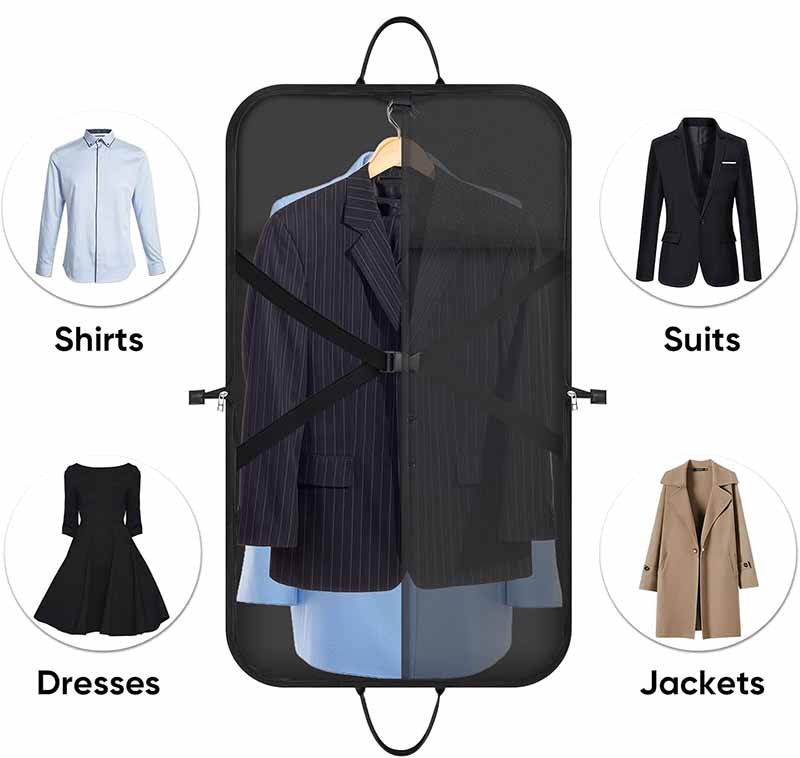
Store Pants Between Jacket Layers in a Garment Bag
When traveling with a full suit, never toss the pants loosely into your suitcase. Instead, place the folded dress pants between the back of the jacket and the inner lining in a garment bag.
This technique:
• Shields pants from compression
• Maintains the jacket’s shoulder structure
• Keeps both pieces wrinkle-free and ready to wear
If using a travel suit case, lay the pants flat on top of the jacket before closing.
Pro Move: Wrap the pants in tissue paper first for added protection.
Match Packing Method to Fabric Type
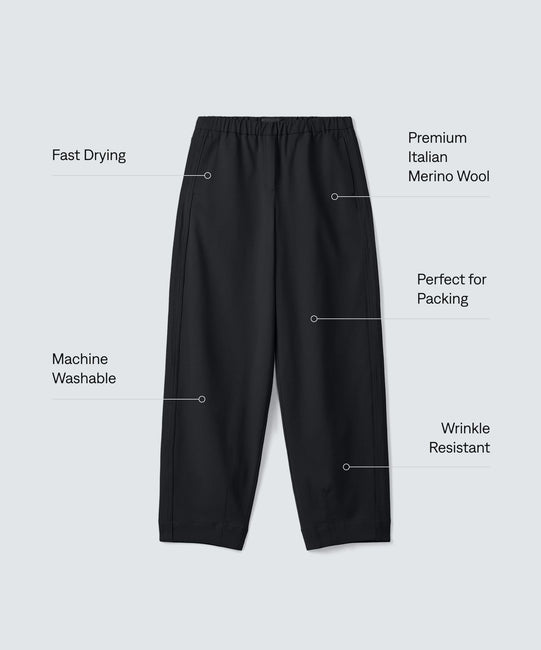
Choose Wrinkle-Resistant Pants for Easy Packing
Not all dress pants respond well to folding. Modern travel pants made from Merino wool blends or performance fabrics are engineered to resist wrinkles and recover quickly.
These materials:
• Respond better to folding techniques
• Bounce back after compression
• Transition seamlessly from suitcase to meeting
Brands like Unbound Merino design their pants specifically for this kind of travel-friendly packing.
Look for: Labels like “wrinkle-resistant,” “stretch,” or “travel-ready” when shopping.
Avoid Folding Delicate, Unstructured Fabrics
Thin, drapey fabrics like linen or lightweight cotton can develop stubborn creases when folded. If you must pack them:
• Roll instead of fold
• Use a garment bag
• Pack on top of other items to avoid weight
For maximum protection, consider wearing delicate pants on the flight.
Avoid These Common Packing Mistakes
Never Skip the Prep Step
Folding wrinkled or misaligned pants only sets those flaws in stone. Always smooth and align before folding—this single step determines the final outcome.
Mistake to avoid: Folding directly from the closet without preparation.
Don’t Remove All Air from Poly Bags
Sucking out every bit of air presses the fabric flat, creating sharp, hard-to-remove creases. A slight air pocket acts like bubble wrap for your pants.
Fix: If the bag is sealed too tight, gently reopen it and add a little air.
Stop Using Separate Bags for Each Pair
Multiple poly bags waste space and increase the chance of snagging. One bag for all pairs is cleaner, safer, and more efficient.
Exception: Only use separate bags if pants are different colors or materials that might bleed.
Apply the Right Method for Your Travel Scenario
For Business Travel
Use the straight fold + poly bag combo for a polished look upon arrival. Pack pants on top of softer items like shirts or sweaters to minimize pressure.
Bonus: Pair with wrinkle-resistant dress shirts for a no-iron wardrobe.
For Weddings or Formal Events
Opt for the garment bag method with pants stored inside the suit jacket. This ensures both pieces stay pristine for photo-ready moments.
Pro Tip: Bring a portable steamer—it handles minor creases in under a minute.
For Carry-On Only Trips
The 30-second fold is your best friend. It’s fast, compact, and works perfectly with travel-specific dress pants.
Pack folded pants near the top of your carry-on, surrounded by soft layers like underwear or socks for added cushioning.
For Long Trips
Use the combined poly bag method for multiple pairs. Stack 2–3 folded pairs in one bag and place them in the center of your suitcase, between layers of clothing.
This keeps them protected throughout extended compression.
Frequently Asked Questions About How to Pack Dress Pants
How do you pack dress pants without wrinkles?
Use the straight fold or 30-second fold method, then place the folded pants in a poly bag with a small pocket of air. This cushion prevents deep creases. Pack on top of softer items or between suit jacket layers for best results.
What is the 30-second fold method for dress pants?
It’s a space-saving technique where you fold the waistband down, bend each leg at the knee, align with the waistband, fold again, tuck into the waist, and lift from the center. It takes about 30 seconds and works best with structured travel pants.
Should I roll or fold dress pants?
Always fold dress pants—rolling can distort the crease line and cause uneven wrinkles. Folding preserves the drape and works better with protective methods like poly bags.
Can I pack dress pants in a carry-on?
Yes. Use the 30-second fold for compactness, place in a poly bag with air, and pack near the top of your carry-on. Surround with soft items like socks or underwear for extra cushioning.
Do I need a garment bag for dress pants?
Not always. For suits or formal events, yes—store the pants between the jacket layers. For casual business trips, a poly bag with proper folding is sufficient.
How do I unpack dress pants without wrinkles?
Remove the pants from the bag and hang them immediately. Shake gently to loosen folds, then use a portable steamer or hang in a steamy bathroom for 2–3 minutes to release minor creases.
Key Takeaways for Packing Dress Pants Like a Pro
• Start with smooth, aligned pants—this sets the foundation for a wrinkle-free result
• Use the straight fold for formal wear, the 30-second fold for travel pants
• Always use a poly bag—and leave air inside to cushion against pressure
• Pack multiple pairs together in one bag to save space and reduce damage
• Store suit pants between jacket layers in a garment bag for maximum protection
• Choose Merino wool or performance fabrics for best wrinkle resistance
• Avoid common mistakes: skipping prep, over-compressing, or using separate bags
Knowing how to pack dress pants properly means you can travel light and still arrive looking sharp. Whether you’re in a boardroom or at a wedding, these tested methods help you skip the iron and step out confidently—straight from your bag.


