
Loose football pants can be a major distraction on the field. Whether they’re sliding down your waist or dragging below the knee, poorly fitting gear affects your performance, comfort, and appearance. The good news is you don’t need a new pair or expensive accessories to tighten football pants—just two proven, field-tested methods used by high school, college, and pro players. This guide shows you how to lock your pants in place using smart adjustments: repositioning the leg above the knee for better mobility and using sports tape as a belt alternative. You’ll learn step-by-step fixes, avoid common mistakes, and stay game-ready from warm-up to final whistle.
You’ll walk away knowing exactly how to stop constant readjusting, eliminate chafing, and keep your pants secure—no matter how hard you run, cut, or get tackled.
Fix Football Pants Riding Below the Knee
Pants that fall below the knee create drag, chafe your shins, and look unprofessional—often called the “slap dick” look by players. The fix isn’t just pulling them up. It’s a strategic repositioning technique that locks the pants higher on your leg using your existing pads as anchors.
Insert Knee Pads Before Adjusting
Always start with knee pads fully inserted into their pockets. This stabilizes the lower pant leg and prevents shifting during adjustment. If pads fall out while flipping the pants, reinsert them before continuing. Skipping this step leads to instability and slippage during play.
Turn Pants Inside Out First
Flip the entire pant leg inside out before putting them on. This keeps the knee pads from slipping out while you reposition the fabric. Work one leg at a time if the material is stiff or new. This step makes it easier to pull the leg up without losing pad placement.
Pull Pant Legs Up to the Quads
Put the pants on and pull each leg up so the bottom edge sits just above the quadriceps. This high starting point is essential—it sets the foundation for the final lock. Don’t worry about how it looks yet; focus on getting the height right before the final flip.
Reposition Thigh Pads Correctly
Make sure your thigh pads are flipped to face the correct direction. Misaligned pads cause bunching and discomfort. Adjust them now so they lie flat against your thighs. Proper orientation ensures the final flip stays secure during cuts, sprints, and hits.
Flip Over Thigh Pads to Lock Position
The key move: flip the pants one final time—over the top of the thigh pads. This traps the pads between layers of fabric, locking the pants in place. The knee pads will now sit above the knee, which is intentional. They weren’t protecting the joint anyway when positioned below it.
Pro Tip: The fit might look unusual at first, but it works. Players report no slippage all game—no more constant tugging between plays.
Stop Football Pants From Falling Down at the Waist
Even properly sized pants can slide down during play. Belts often fail—buckles loosen, break, or get lost. A better solution? The sports tape hack used by college athletes to create a custom, unbreakable waistband.
Use the Bathroom Before Applying Tape
Do not skip this step. Once the tape is on, removing it mid-game is nearly impossible. Applying tape before using the bathroom is a game-day disaster waiting to happen. Make this part of your pre-game routine to avoid emergencies.
Wrap Athletic Tape Around Your Waist
Put on your pants normally, then wrap standard sports tape around your waist. Start at the front and go all the way around. Use full-stretch tension for a snug fit, but don’t restrict breathing. Overlap each pass by half the tape width for consistent hold.
Fold Tape Down for a Reinforced Band
After one full wrap, fold the tape down over itself to double the thickness. This creates a reinforced waistband that resists tearing and slipping. Add 2 to 3 total layers for ideal durability. More layers mean a tighter, longer-lasting hold.
Test the Tape Fit Before Game Day
Try the tape method at least once during practice. Check:
• Does it hold during sprints and jumps?
• Is it tight enough to prevent slippage?
• Can you move freely without discomfort?
Adjust tension or layers as needed. The goal is secure, comfortable hold—not maximum tightness.
Expert Note: Unlike belts, sports tape forms a continuous band with no weak points. It won’t come undone when you’re tackled or grabbed.
Choose the Right Fix for Your Fit Issue
Not every problem needs the same solution. Pick the method that matches your specific issue.
Above-Knee Flip: Best for Shin Drag
If your pants hit your shins or feel heavy during runs, use the flip-over method. It lifts the entire leg, removes fabric drag, and locks in place using existing pads. No extra tools needed—just technique.
Benefits:
• Eliminates chafing on shins
• Improves sprint efficiency
• Keeps pads stable without straps
• Looks cleaner than sagging pants
When to Avoid:
• If your pants are already too short
• If your league mandates specific knee pad positioning (rare)
Sports Tape Hack: Best for Loose Waist
If your pants slide down no matter how tight the drawstring, the tape method is your fix. It’s faster than the flip method and ideal for slightly oversized pants or last-minute gear issues.
Benefits:
• No belt needed
• Holds through tackles and pulls
• Custom fit with adjustable tension
• Cheap and widely available materials
When to Avoid:
• If you have sensitive skin or tape allergies
• If you expect to change pants mid-game
Combine Both Methods for Maximum Hold
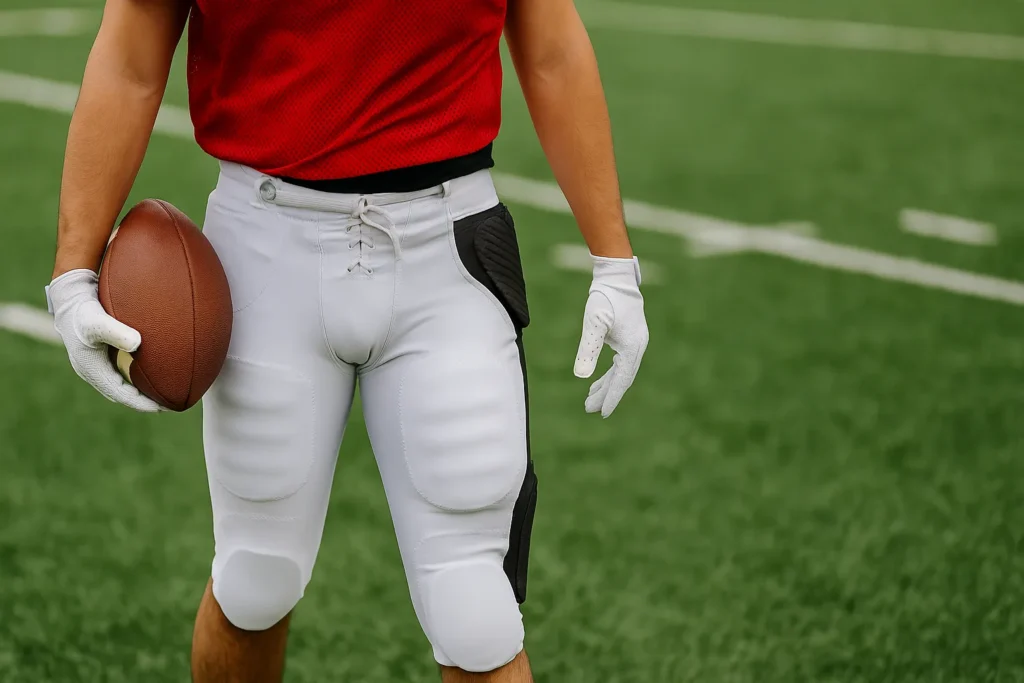
For players dealing with both long legs and a loose waist, use both techniques together. First, reposition the legs above the knee using the flip method. Then, secure the waist with sports tape. The result? Pants that stay exactly where you want them, all game long.
Pro Combo Tip: Do the knee adjustment first, then apply tape. This ensures proper pant height before locking the waist.
Avoid These Common Mistakes
Even simple fixes fail when done wrong. Watch out for these errors.
Skipping the Final Flip Over Thigh Pads
The last flip is what locks everything in place. If you stop early, the pants will loosen during play. Make sure the fabric folds cleanly over the pad ridge to create a secure hold.
Using Weak or Low-Quality Tape
Dollar-store tape or flimsy alternatives won’t hold. Use real athletic tape like Zinc Oxide tape with strong adhesion. Test it by pulling hard—it shouldn’t stretch or peel.
Over-Tightening the Tape
More layers aren’t always better. Over-tightening restricts breathing and core movement. You should be able to take a full breath and bend at the waist comfortably.
Trying It for the First Time on Game Day
Never attempt these methods without testing them first. Practice during practice. Work out kinks when it doesn’t matter.
Pre-Game Checklist for Tight Pants
Get ready fast with this quick checklist.
For the Above-Knee Method:
• Knee pads inserted and secure
• Pants flipped inside out before wearing
• Legs pulled up to quads before final flip
• Thigh pads correctly oriented
• Final flip executed over thigh pads
For the Sports Tape Method:
• Bathroom visit completed
• High-quality athletic tape ready
• 2–3 layers planned for durability
• Fit tested during practice drills
Why These Football Pant Fixes Actually Work
Both methods solve real problems with smart, proven logic.
The above-knee flip uses physics—trapping pads between fabric layers creates friction and resistance. It’s like a built-in garter system for your pants.
The tape hack replaces weak points (buckles, knots) with a seamless, elastic-free band. It conforms to your shape and holds under stress—something belts can’t match.
Neither method compromises safety. Knee pads above the knee weren’t protecting the joint anyway. And sports tape doesn’t restrict movement or circulation when applied correctly.
Frequently Asked Questions About Tightening Football Pants
Why do my football pants keep falling down?
Your pants likely don’t fit properly or rely on a weak belt system. Use sports tape to create a secure, continuous waistband that won’t loosen during play.
Can I use regular tape instead of athletic tape?
No. Regular tape lacks the strength and adhesion needed. Use Zinc Oxide athletic tape for reliable hold under stress and sweat.
Do knee pads above the knee still protect me?
Knee pads are designed to sit on—not below—the knee. When below, they offer little protection. Moving them above via the flip method doesn’t reduce safety, as they weren’t effective in the wrong position anyway.
Will the flip method damage my pants?
No. The technique uses existing fabric and padding. It doesn’t involve cutting or permanent alteration. Pants return to normal when you reverse the flip.
How tight should the sports tape be?
Tight enough to prevent slippage, but not so tight that it restricts breathing or movement. You should be able to take a full breath and bend at the waist comfortably.
Can I reuse the sports tape?
No. Athletic tape loses adhesion after removal. Always use fresh tape for each game or practice session.
Key Takeaways for How to Tighten Football Pants
• Use the above-knee flip method to stop pants from dragging on your shins and improve mobility.
• Apply sports tape around your waist to replace belts and prevent slippage—no buckles, no breaks.
• Combine both methods if you have long legs and a loose waist for full control.
Test both techniques during practice, not on game day. Use quality materials, avoid common mistakes, and step onto the field with confidence. No more tugging, no more distractions—just secure, game-ready gear that stays put.


