
You’ve invested in a sharp suit, but if your pants don’t fit right, the whole look loses its impact. How are suit pants supposed to fit? They should sit securely at your natural waist, follow the contours of your body without pulling or sagging, and end at the shoe with a clean, intentional break. Ill-fitting pants—whether too tight in the seat, bunched at the ankles, or sliding down—can undermine even the most tailored jacket. In this guide, you’ll learn the exact standards for a well-fitted pair of suit pants, from waist to hem, how to fix common issues, and how to choose the best cut for your body type.
You’ll discover how to measure yourself accurately, spot fit problems before they ruin your look, and make smart choices whether you’re buying, renting, or tailoring. With the right fit, your suit won’t just look professional—it will feel effortless and confident.
Waistband Should Sit at Natural Waist

Find Your Natural Waistline
The waistband of suit pants must rest at or just above your natural waist, not where your jeans sit. This is the narrowest part of your torso, located above the belly button and below the rib cage. To locate it, bend sideways—the crease that forms is your natural waist. This position ensures a balanced silhouette and prevents the pants from sagging or riding up. Wearing suit pants too low creates a sloppy, outdated look and disrupts the suit’s proportions.
Snug But Not Tight
A properly fitting waistband should feel snug but not restrictive. You should be able to move freely—sit, walk, or reach—without the pants gaping or digging into your skin. If the waistband leaves red marks or slips down without a belt, it’s too tight or too loose. A well-fitted waistband stays in place with minimal support, allowing you to wear a belt without over-tightening.
Measure Correctly for Fit
To get an accurate waist measurement:
• Stand naturally, feet shoulder-width apart
• Wrap a tape measure around your natural waistline
• Keep it level and snug, not pulled tight
• Do not suck in your stomach—measure as you normally carry yourself
Include the fullest part of your hips if you have a pronounced hip-to-waist ratio. This measurement is essential for online orders, rentals, or custom tailoring.
Seat and Thighs: Smooth, Not Tight or Baggy

No Pulling Across the Seat
The back of the pants should lightly touch the body with no tension or horizontal wrinkles. If the fabric pulls when you sit or walk, the seat is too tight—this can lead to seam splitting and an unprofessional appearance. Conversely, baggy or drooping fabric in the seat makes the suit look ill-fitting and outdated. The ideal fit allows for movement while maintaining a clean drape.
Thighs Should Skim, Not Cling
The thighs should have a soft skim—close enough to look tailored but loose enough for full range of motion. You should never see the outline of your legs through the fabric. If the pants feel tight when climbing stairs or sitting, the cut is too narrow. If excess fabric bunches when you move, the legs are too wide and need tapering.
Maintain a Clean Vertical Line
From hip to knee, the pants should form a smooth, uninterrupted line. This enhances your silhouette and gives the impression of height and balance. Avoid fits that balloon at the thighs or taper too early, as these distort proportions and draw unwanted attention.
Get the Right Pant Break
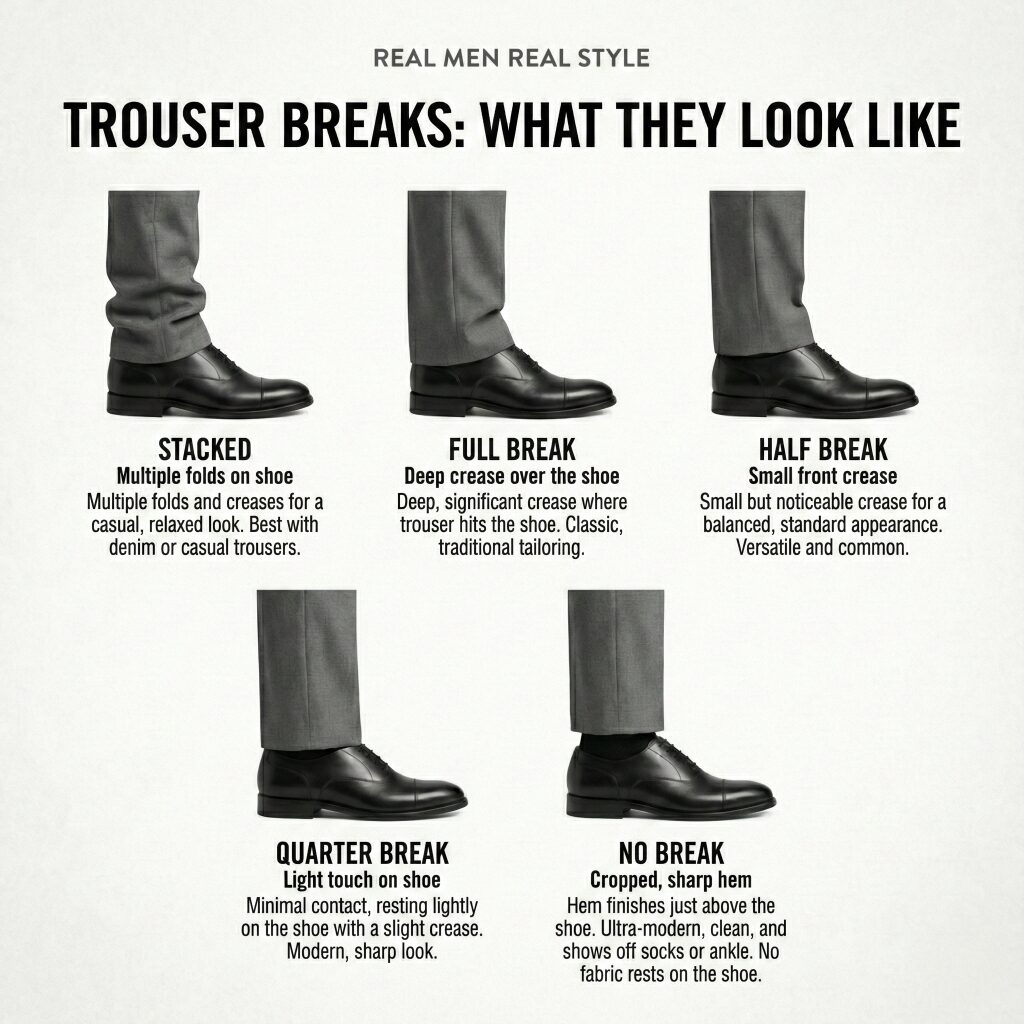
What Is the Break?
The break is how much the pant leg folds over your shoe. It’s a subtle detail that dramatically affects your overall look. There are four main types: no break, slight, medium, and full. Choosing the right one depends on your style, shoe height, and body proportions.
No Break: Modern and Sharp
• Pants graze the top of the shoe with no fold
• Hem ends 1–2 inches above the sole
• Best for slim or tapered fits
• Creates a contemporary, fashion-forward look
• Ideal for shorter men or minimalist footwear
Pro tip: Wear with loafers or low-top dress shoes to maintain the clean line.
Slight Break: Most Versatile
• One small fold of fabric rests on the shoe
• Hem touches the shoe but doesn’t pool
• Widely accepted in business, formal, and social settings
• Works with most body types and suit styles
This is the safest choice if you’re unsure—professional, balanced, and timeless.
Medium (Half) Break: Classic and Conservative
• Visible fold of fabric over the shoe
• Offers a traditional, full look
• Common in classic or American-style suits
• Best for taller men or those with longer legs
Avoid if you’re short—it can visually shorten your legs.
Full Break: Avoid for a Polished Look
• Excess fabric pools around the ankle
• Creates a sloppy, outdated appearance
• Rarely appropriate in modern professional or formal wear
Even in relaxed settings, a full break rarely looks intentional. When in doubt, go shorter.
Taper and Leg Opening: Shape Matters

Modern Tapered Fit
Today’s well-fitting suit pants are tapered from the knee down, meaning they’re roomier at the thigh and gradually narrow toward the ankle. This creates a streamlined, contemporary silhouette that flatters most body types. The leg opening should be wide enough to drape cleanly over your shoes but narrow enough to avoid a bell-bottom effect.
Ideal Leg Opening Width
• 15–17 inches around for most men
• Narrower for slim fits (14–15″)
• Wider for classic or relaxed fits (17–18″)
When viewed from the front, the pant leg should hang straight, not flare or cling.
Avoid These Tapering Mistakes
• Too narrow at the ankle: Restricts movement and cuts into the calf
• Excess fabric at the hem: Causes bunching and a sloppy break
• Premature tapering: Starts too high on the leg, creating a “pencil leg” look
Aim for a gradual, natural taper that complements your leg shape.
Fix Common Fit Problems
Tight Seat? Get It Tailored
If the pants pull across the back when you sit or walk, the seat is too tight. A tailor can let out the seam or adjust the pattern. Don’t ignore this—tight seats strain fabric and ruin the drape of the suit.
Baggy Seat? Pinch or Tailor
Excess fabric in the seat makes you look boxy. A temporary fix: use a safety pin to pull in the waistband. But for a lasting solution, have a tailor take in the back seam. This costs $20–$40 and makes a dramatic difference.
Pants Too Long? Hem Them
If your pants create a full break or drag on the ground, they’re too long. Turn them inside out and fold the excess to test the right length before hemming. Most pants have 1–2 inches of extra fabric inside for adjustments.
Pants Too Short? Limited Fixes
If they’re too short, options are limited:
• Use iron-on hem tape (only if extra fabric exists)
• Wear higher socks to minimize exposure
• Replace the pants—it’s often the best solution
Short pants draw attention to your ankles and break the suit’s vertical line.
Know the Difference: Suit vs. Tuxedo Pants

Suit Pants Have Belt Loops
Standard suit pants come with belt loops and are designed to be worn with a belt. They sit at or just below the navel and offer a slightly more relaxed fit. This makes them versatile for business, interviews, or weddings.
Tuxedo Pants Require Suspenders
Tuxedo pants do not have belt loops. Instead, they’re meant to be worn with suspender buttons inside the waistband. They fit snugly at the natural waist and are often worn with a slight or half break for a formal appearance.
Key takeaway: Never wear a belt with tuxedo pants—it’s a classic style mistake.
Renting? Measure and Try On First
Accurate Measurements Are Crucial
When renting, measure your natural waist and inseam precisely. The inseam should be measured from the crotch down to where you want the hem to end—factoring in your shoe height and desired break.
Use Try-Before-You-Buy Services
Opt for rental services like Generation Tux or The Black Tux that offer:
• Free home try-on
• Virtual style consultations
• Easy exchanges
This lets you assess fit, fabric, and length before your event.
Check Fit Before the Big Day
Always try on rented pants at least a week in advance. Sit, walk, and simulate movement to ensure comfort. If adjustments are needed, you’ll have time to exchange or tailor.
Measure Yourself Like a Pro
Waist Measurement Steps
- Stand naturally, feet shoulder-width apart
- Wrap the tape around your natural waist (above the belly button)
- Keep it snug but not tight
- Don’t suck in your stomach—measure as you normally carry yourself
Inseam Measurement Steps
- Put on the shoes you’ll wear with the suit
- Measure from the crotch seam down to the floor
- Or, measure an existing well-fitting pair from crotch to hem
- Adjust for desired break (e.g., subtract 1 inch for no break)
Use these numbers when shopping online or ordering custom pants.
Fit Tips by Body Type
Athletic Build: Slim Fit with Taper
• Choose slim-fit pants with room in the thigh
• Opt for a gradual taper to balance muscular legs
• Avoid skinny cuts that cling or restrict
This maintains a sharp look without sacrificing comfort.
Broad Build: Flat Front, Straight Leg
• Flat front pants reduce bulk
• Straight-leg cuts create a clean, elongated line
• Avoid pleats—they add volume
This minimizes visual weight and keeps the silhouette streamlined.
Slim Build: Slight Taper or Pleats
• Pleated pants add structure and volume
• Slightly tapered legs prevent a drowned look
• Avoid ultra-skinny fits—they exaggerate thinness
Pleats help the pants drape better and look more balanced.
Tall Build: Pleated or Classic Fit
• Pleated pants help fill out long legs
• Work well with fuller breaks and higher rises
• Can carry more fabric without looking baggy
These proportions maintain balance and avoid a “stretched” look.
Short Build: Slim or Tapered Fit
• Slim or tapered pants elongate the legs
• Pair with a no break or slight break
• Wear with monochromatic shoes to extend the line
Avoid wide legs or full breaks—they shorten your frame.
Frequently Asked Questions About Suit Pants Fit
Where should suit pants sit on your body?
Suit pants should sit at or just above your natural waist—the narrowest part of your torso, above the belly button. This ensures a balanced, proportional look and prevents sagging or riding.
How tight should suit pants be in the seat?
They should lightly touch the body with no pulling or horizontal wrinkles. If fabric strains when you sit or walk, the seat is too tight and needs tailoring.
What is the best pant break for a professional look?
A slight break—one small fold of fabric resting on the shoe—is the most versatile and widely accepted for business, formal, and social settings.
Can I wear a belt with tuxedo pants?
No. Tuxedo pants are designed to be worn with suspenders, not belts. They have no belt loops, and wearing a belt with them is a common style error.
How do I fix suit pants that are too long?
Turn the pants inside out and fold the excess fabric to test the length. Most pants have 1–2 inches of extra fabric inside for hemming by a tailor.
Should suit pants be tapered?
Yes, most modern suit pants are tapered from the knee down for a streamlined, contemporary silhouette. The taper should be gradual and complement your leg shape.
Key Takeaways for a Perfect Suit Pants Fit
A well-fitted pair of suit pants should sit snugly at your natural waist, follow your body’s lines without pulling or sagging, and end with a clean, intentional break over your shoes. The seat and thighs should be smooth, with no bunching or tightness, and the legs should taper naturally to the ankle. Whether you’re buying, renting, or tailoring, always measure accurately and try on with your intended shoes.
If you’re unsure about fit, consult a tailor or use a rental service with try-on options. A $30 adjustment can transform how a suit looks and feels. Focus on proportion, movement, and confidence—when your pants fit right, your entire presence elevates.


