
Leather pants are a statement piece—sleek, durable, and built to last when cared for properly. But how to wash leather pants safely is a common mystery, and many people accidentally destroy them with water, detergent, or heat. Unlike fabric garments, leather is a natural material that reacts poorly to moisture and harsh chemicals. Machine washing or soaking can cause irreversible damage like shrinking, cracking, or stiffness. The truth? You don’t “wash” leather pants like regular clothes—you clean and condition them with precision.
This guide gives you a foolproof, step-by-step method to clean your leather pants at home without risking damage. You’ll learn how to spot clean spills, deep clean with safe products, condition for softness, and store them correctly. We’ll also cover what never to do, how to test cleaners safely, and when to call a professional. Whether you’re dealing with coffee stains or everyday grime, this is your complete roadmap to keeping leather looking luxurious for years.
Remove Fresh Stains Before They Set
Wipe Spills Immediately with a Damp Cloth
Act fast when something spills on your leather pants—delay increases the risk of permanent staining. For water-based spills like coffee, juice, or sweat:
• Use a soft, lint-free cloth (microfiber is ideal)
• Lightly dampen the cloth—never soak it—with clean water
• Gently wipe the stain in small circular motions
• Avoid scrubbing, which can scratch or spread the stain
After cleaning, use a dry cloth to blot the area and remove moisture. Let the pants air dry at room temperature, away from sunlight or heaters. Never use a hairdryer or fan on high heat.
Handle Oil and Grease Stains with Absorbent Powder
Oil-based stains (from food, lotions, or skin) need a different approach:
• Sprinkle cornstarch or talcum powder directly on the spot
• Let it sit for 6–8 hours or overnight to draw out the oil
• Gently brush off with a soft-bristled brush
• If residue remains, wipe with a barely damp cloth
Do not use dish soap or alcohol—these strip natural oils and damage the leather’s finish.
Deep Clean Using Leather-Safe Cleaner

Choose a pH-Balanced Cleaner for Garments
Never use household detergents, dish soap, or all-purpose cleaners. They contain chemicals that break down leather fibers. Instead, pick a cleaner made specifically for leather clothing, not furniture or car interiors. Look for:
• pH-balanced formula
• Non-toxic, solvent-free ingredients
• Compatibility with your leather type (aniline, suede, or coated)
Trusted brands include Lexol, Bickmore, and Chamberlain’s. Always check the label to confirm it’s safe for apparel.
Clean in Sections with Minimal Moisture
- Test the cleaner on a hidden area (inner waistband or back seam)
- Wait 15 minutes to check for discoloration or texture changes
- If safe, apply a pea-sized amount to a soft cloth
- Work in small sections using gentle circular motions
- Focus on high-wear areas like knees, thighs, and cuffs
Never saturate the leather. Let the pants dry completely for 6–12 hours before moving to the next step.
Condition Leather After Every Cleaning
Replenish Oils to Prevent Cracking
Cleaning removes dirt but also strips natural oils that keep leather soft. Skipping conditioning leads to dryness, stiffness, and cracks. Always condition after cleaning—or every 3–6 months for routine care.
Apply Garment-Specific Conditioner Correctly
Use a conditioner designed for leather clothing, not boots or car seats. Here’s how:
1. Put a small amount on a clean, soft cloth
2. Rub in a thin, even layer over the entire pant surface
3. Let it absorb for 15–30 minutes
4. Buff off excess with a dry microfiber cloth
This restores suppleness, enhances shine, and protects against future stains.
Pro Tip: Over-conditioning can leave a greasy film or clog pores. Use sparingly—only what the leather can absorb.
Never Machine Wash or Soak Leather Pants
Machine Washing Causes Irreversible Damage
Putting leather pants in the washing machine—even on gentle cycle—leads to:
• Shrinking or warping due to water absorption
• Color fading or bleeding
• Loss of shape and structural integrity
Leather doesn’t stretch back. Once it’s misshapen, it’s often beyond repair.
Soaking Leads to Hardening and Cracks
Submerging leather in water causes fibers to swell and contract as they dry. This process:
• Breaks down natural oils
• Makes leather stiff and brittle
• Increases risk of surface cracking
Even “water-resistant” leather isn’t waterproof. Never soak your pants.
Avoid Harsh Household Cleaners
Dangerous Products That Damage Leather
Many DIY hacks recommend vinegar, alcohol, or dish soap—but these harm leather:
| Product | Why It’s Harmful |
|---|---|
| Vinegar | Too acidic—dries out leather and fades color |
| Rubbing Alcohol | Strips oils and damages dyed finishes |
| Dish Soap | Removes protective coatings and natural moisture |
| Bleach or Ammonia | Causes irreversible discoloration and fiber breakdown |
Stick to leather-specific, pH-balanced products only.
Use Only pH-Neutral Formulas
Leather has a delicate pH balance. Alkaline or acidic cleaners disrupt it, leading to premature aging. Always confirm your cleaner is pH-neutral and labeled for clothing-grade leather.
Air Dry Properly to Prevent Shrinkage
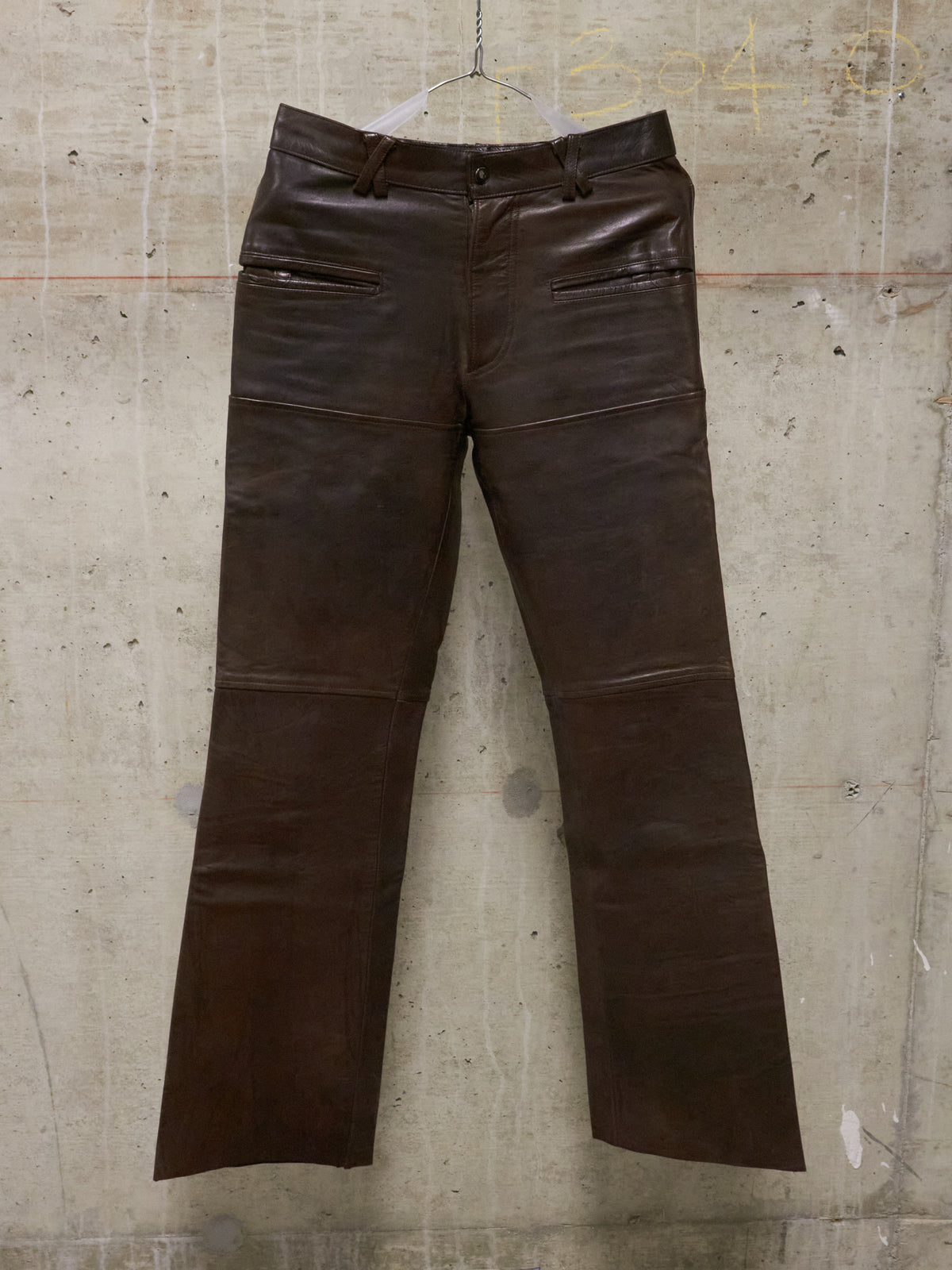
Heat Ruins Leather Texture and Fit
Never use a dryer, radiator, heater, or direct sunlight to speed drying. Heat causes:
• Shrinkage
• Hardening and brittleness
• Uneven color fading
Instead:
• Lay flat or hang on a wide, padded hanger
• Place in a well-ventilated room at room temperature
• Keep away from windows and vents
• Allow 12+ hours to dry fully
If pants feel stiff after drying, apply conditioner—they’ll soften quickly.
Store Leather Pants to Maintain Shape

Use Padded Hangers for Long-Term Wear
Wire hangers create shoulder bumps and creases. Always use:
• Wide, padded hangers
• Hangers that support the waistband evenly
Avoid folding thick leather—it can cause permanent creases.
Protect from Light, Moisture, and Odors
Store in a:
• Cool, dry place
• Breathable cotton or canvas garment bag
• Area shielded from direct sunlight (UV fades color)
Never use plastic bags—they trap moisture and encourage mold.
Warning: Cedar closets can emit oils that affect leather dyes. Use with caution or avoid direct contact.
When to Take Leather Pants to a Pro
Seek Expert Help for Tough Stains or Odors
If your pants have:
• Set-in ink, mud, or grease
• Mold or mildew growth
• Lingering sweat or smoke smells
…home cleaning may not be enough. Professionals use:
• Leather-safe solvents
• Color-matching dyes
• Industrial conditioning tools
They’re also best for delicate leathers like lambskin or aniline.
Professional Cleaning Is a Smart Investment
Costing $20–$50, a pro clean can:
• Add years to your pants’ life
• Prevent damage from DIY mistakes
• Restore luster better than at-home methods
Consider it annual maintenance for high-wear pieces.
Always Test Cleaners Before Applying
Perform a Patch Test Every Time
Even safe products can react with certain dyes or finishes. To test:
1. Apply a tiny amount to an inconspicuous area
2. Wait 15–30 minutes
3. Check for:
• Color transfer
• Stickiness or roughness
• Cloudiness or staining
If any reaction occurs, choose a different product.
Expert Note: Vintage or uncoated leathers are more sensitive. When in doubt, check the care label or consult the manufacturer.
Keep Leather Pants in Top Condition Long-Term
Follow a Simple Maintenance Routine
Extend the life of your leather with these habits:
• Wipe down after 2–3 wears with a dry microfiber cloth
• Condition every 3–6 months (more often in dry climates)
• Spot clean spills immediately
• Rotate wear to reduce stress on seams
Well-cared-for leather ages beautifully.
Prevent Common Damage
Avoid:
• Wearing in heavy rain
• Sitting on rough surfaces (concrete, gravel)
• Spraying perfume or hairspray directly on leather (alcohol damages finish)
A little prevention keeps your pants looking sharp and lasting longer.
Frequently Asked Questions About How to Wash Leather Pants
Can I wash leather pants in the washing machine?
No. Machine washing exposes leather to excessive water and agitation, causing shrinkage, warping, and cracking. Always clean leather pants by hand using a damp cloth and leather-safe products.
How do I dry leather pants after cleaning?
Air dry at room temperature, away from heat and sunlight. Hang on a padded hanger or lay flat in a well-ventilated area. Never use a dryer, hairdryer, or radiator.
What happens if leather gets wet?
If leather gets wet, blot with a dry cloth and let it air dry slowly. Avoid heat. If soaked, it may stiffen or crack—condition afterward to restore softness.
Can I use baby wipes to clean leather pants?
No. Most baby wipes contain alcohol and fragrances that dry out leather and damage the finish. Use only leather-safe cleaners and a soft cloth.
How often should I condition leather pants?
Condition every 3–6 months, or after every deep clean. In dry climates or with frequent wear, condition more often to prevent cracking.
Should I take leather pants to the dry cleaner?
Only if they’re heavily soiled or stained. Regular dry cleaners may use harsh solvents. Seek a specialty leather cleaner who uses garment-safe methods.
Key Takeaways for How to Wash Leather Pants Safely
Knowing how to wash leather pants isn’t about deep cleaning—it’s about smart, gentle care. Avoid water, heat, and household cleaners. Stick to spot cleaning with a damp cloth, use pH-balanced leather cleaners, and always condition after cleaning. Store properly on padded hangers in breathable bags, and test every product first. For tough stains or delicate leathers, trust a professional.
With this routine, your leather pants will stay soft, supple, and stylish for years. Treat them right, and they’ll only get better with age.


